


Volcanoes National Park, Rwanda
Rwanda's Gorilla Sanctuary
In the cool highlands of northern Rwanda, where mist clings to the jungle and volcanic peaks silhouette the dawn sky, lies a place of deep connection and global wonder—Volcanoes National Park. Revered as the beating heart of gorilla conservation, this iconic reserve is where travelers come to see wildlife, meet it eye to eye, breath to breath.
This is where gorilla trekking in Rwanda happens: in ancient montane forests cloaking the slopes of the Virunga Volcanoes. It’s a landscape of rare intimacy, shaped by bamboo thickets, cloud cover, and the steady rhythm of footfall through the undergrowth. The gorilla experience in Volcanoes is Rwanda’s most sought-after safari. It's also among the world’s most thrilling wildlife encounters.
But Volcanoes is more than gorillas. The park is a sanctuary of biodiversity, hosting golden monkeys, forest elephants, endemic birds, and rare orchids. It’s also a cradle of conservation history. From Dian Fossey’s pioneering work to today’s high-impact ecotourism model, Volcanoes has helped shape how the world protects its most endangered primates.
Accessibility is part of the magic. Just a 2.5-hour scenic drive from Kigali, the park is a gateway to both luxury and meaning. Surrounding the forest are elegant lodges that blend seamlessly with the land, offering firelit views, wellness rituals, and purpose-driven hospitality.
In this travel guide, we explain in detail what makes Volcanoes National Park Rwanda’s eco-tourism jewel and give you some safari offers to inspire you to plan a holiday in Rwanda.
Rwanda Gorilla Trekking Safaris


Wildlife: Flora & Fauna
Volcanoes National Park is part of the great Albertine Rift montane forest ecosystem, one of the richest biodiversity belts in Africa. Although best known for its charismatic mountain gorillas, the park supports a complex and ancient web of plant and animal life that makes every trek into its forest an unfolding discovery.
The park’s forest zones are layered in texture and light. Lower slopes are dominated by bamboo forests that transition into dense hagenia and hypericum stands as you ascend. These cool, mist-laden environments are home to over 200 bird species, many of which are endemic to the Albertine Rift—such as the handsome francolin, Ruwenzori double-collared sunbird, and strange weaver.
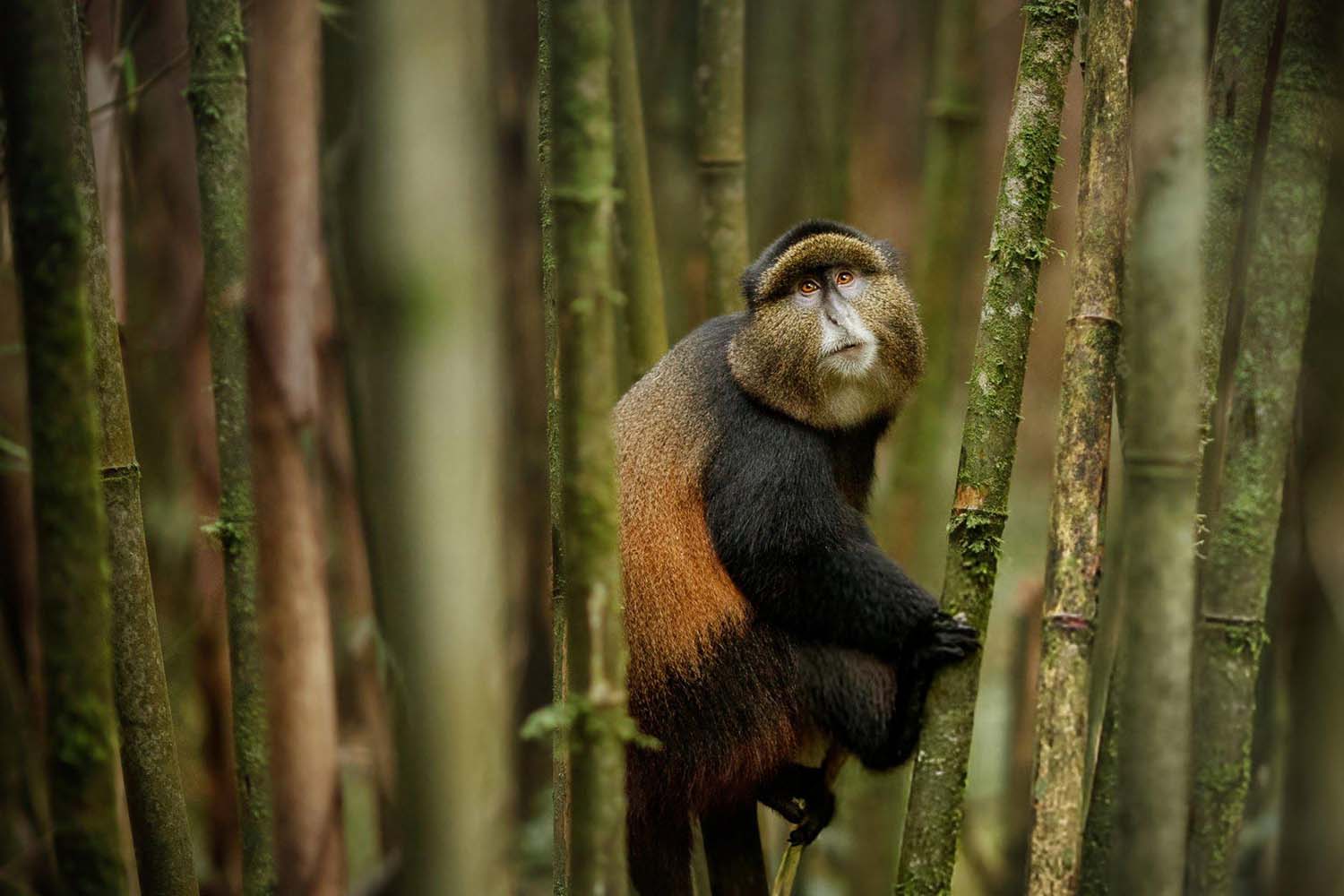
Among the mammals, golden monkeys offer lively, acrobatic counterpoints to the gorillas’ slow grandeur. Forest elephants, though elusive, occasionally leave signs of their passage, while buffalo, bush pigs, and duiker also inhabit the deeper forest. Primates are plentiful: in addition to gorillas and golden monkeys, species like the black-fronted duiker, olive baboons, and bush babies add to the park’s richness.
Volcanoes is also a botanical gem. Over 1,000 plant species flourish here, many adapted to the park’s volcanic soils and ever-changing climate. Ferns, orchids, and flowering alpine plants line the forest floor and give each season a unique character.
Volcanoes Park is no ordinary forest—but a rare ecological enclave that the nature-travel world has only just started to discover.
Mountain Gorillas
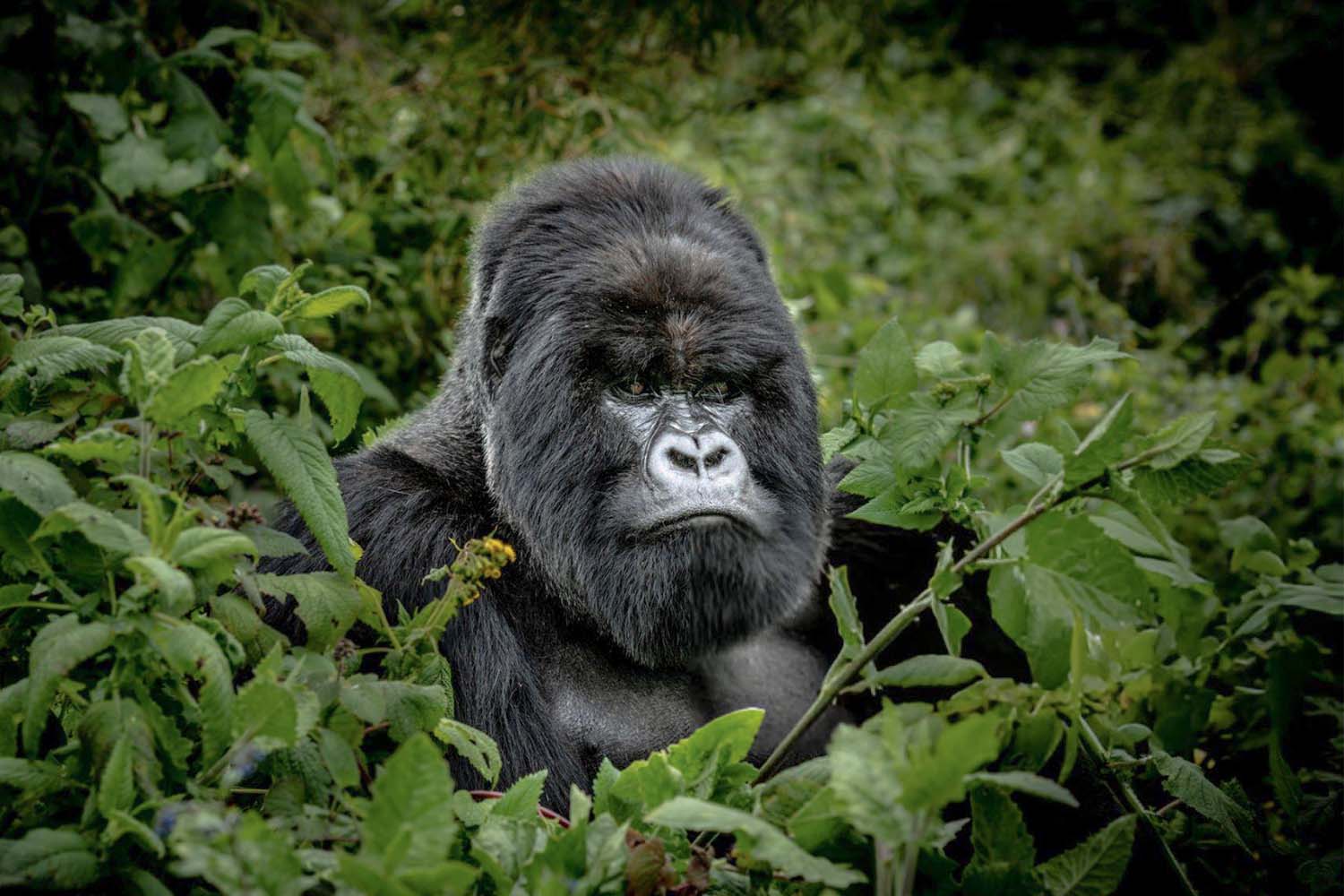
At the heart of Volcanoes National Park lies one of the most extraordinary wildlife encounters on Earth: meeting the endangered mountain gorillas in their misty, montane home. Sharing 98% of our DNA, these gentle giants exude an intelligence and emotional presence that can leave visitors awestruck.
Rwanda is home to over one-third of the world’s remaining mountain gorillas, and Volcanoes National Park protects around a dozen habituated gorilla families, each with its own dynamics, territories, and personalities. Guided by expert trackers, visitors embark on early morning treks deep into the forest to spend one unforgettable hour in the company of a gorilla group.
The experience is tightly regulated for the safety of both gorillas and guests: only eight permits are issued per group, per day. This not only ensures minimal disturbance but also makes each encounter feel deeply personal. The cost of the permit supports crucial conservation work and funds community initiatives that have helped make gorilla protection a national priority.
From playful juveniles tumbling in the undergrowth to silverbacks resting watchfully, every moment feels like a window into another world. The trek itself—sometimes steep, always scenic—is part of the adventure, passing through dense bamboo, mossy slopes, and forest drenched in mist.
Volcanoes National Park’s gorilla trekking is Rwanda’s signature experience. A transformative adventure that lives in the memory long after the forest has faded from view.
Activities in Volcanoes N.P.
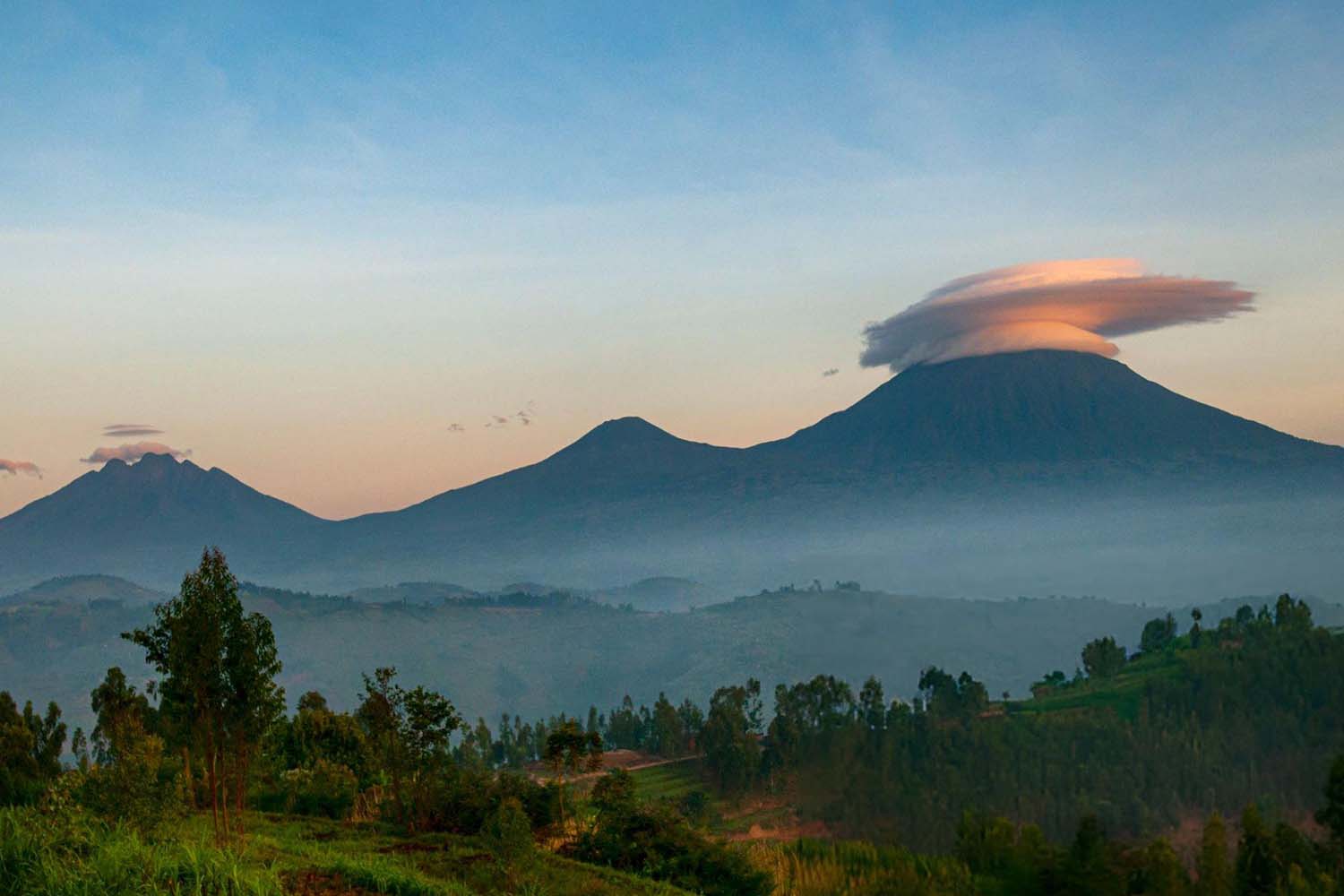
Volcanoes National Park offers much more than just gorilla trekking—it is a mosaic of immersive wilderness experiences that unfold on the slopes of ancient volcanoes. Whether you're here for wildlife, cultural encounters, or physical challenge, the park’s variety of guided excursions speaks to both the adventurous and the contemplative traveler.
Gorilla Trekking
The signature experience, gorilla trekking, is a carefully orchestrated encounter with a habituated gorilla family. Treks range from 1 to 5 hours, depending on the family’s location, and groups are limited to eight visitors per trek to ensure a quiet, respectful hour of observation. You’ll be guided by experienced trackers who interpret gorilla behavior and ensure a low-impact presence. Check out our gorilla trekking safari offers to get an idea of what is possible.
Golden Monkey Tracking
Rare and endemic to the Albertine Rift, golden monkeys are agile, social, and endlessly entertaining to observe. Tracking them is typically easier and shorter than a gorilla trek, making it a great add-on or gentler alternative. Watch them leap through bamboo thickets in lively troops, often coming surprisingly close.
Volcano Hiking
Volcanoes National Park is named for the five Virunga volcanoes it encompasses—Bisoke, Karisimbi, Gahinga, Muhabura, and Sabyinyo. The most popular hike is to Mount Bisoke’s crater lake (1-day hike), while Karisimbi (2-day hike with camping) attracts more experienced trekkers. These trails offer rare views, alpine vegetation, and a true sense of elevation.
Dian Fossey Tomb Hike
This moderate trek to the original Karisoke Research Center offers insight into the pioneering work of Dian Fossey and her legacy in gorilla conservation. Along the way, guides share stories of her life, the threats she fought, and how her work continues to shape protection efforts.
Iby’Iwacu Cultural Village
Just outside the park, this community-run experience offers a glimpse into Rwandan traditions—from dance and drumming to herbal medicine and banana beer making. It’s an authentic encounter that emphasizes dignity, participation, and respect.
Each of these experiences can be arranged through Activentures and customized to suit your pace and interests, creating a deeply personal exploration of Volcanoes’ wild and cultural richness.
Location & How to Access
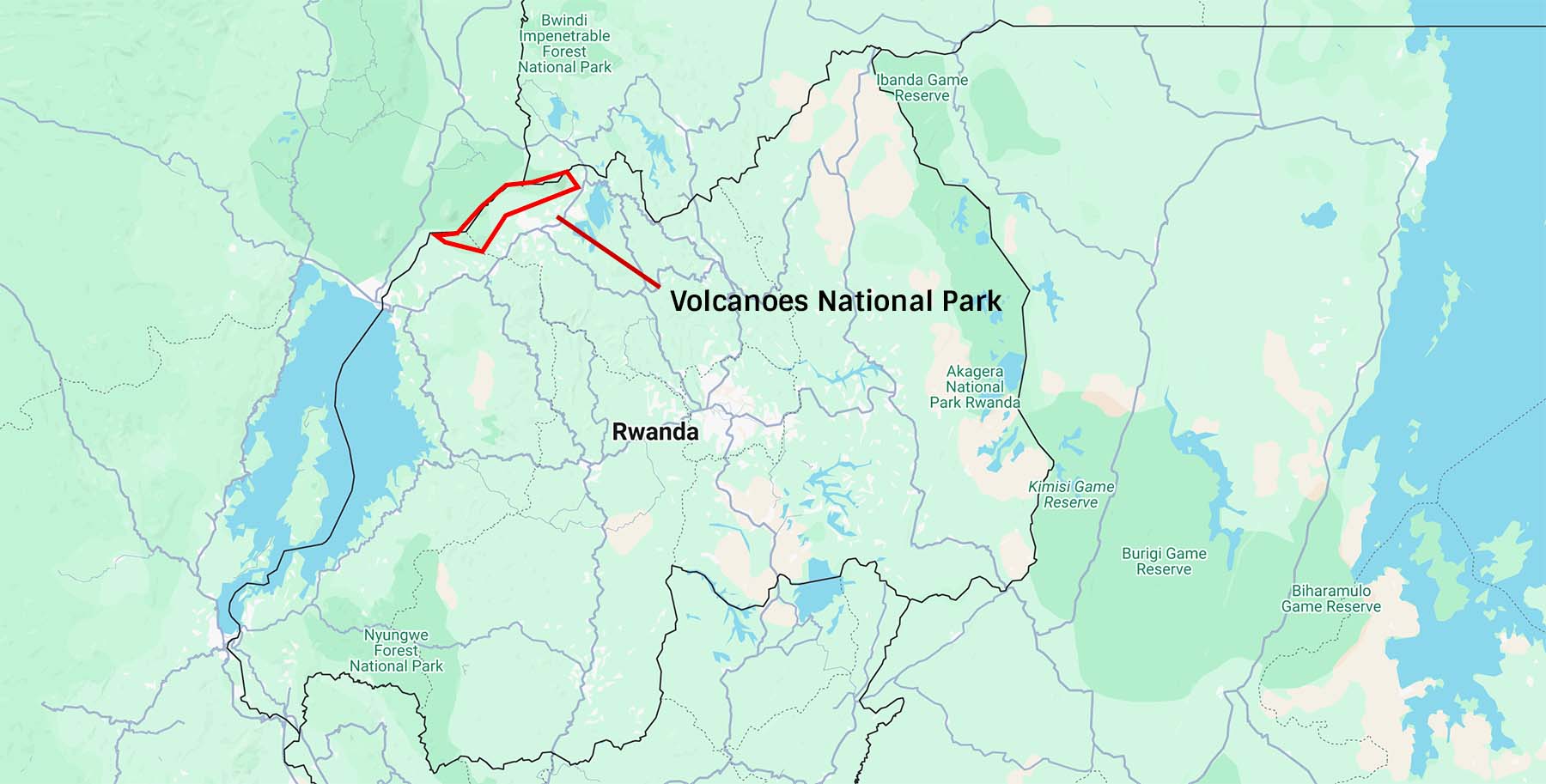
Volcanoes National Park sits in Rwanda’s far northwest, in the Musanze (formerly Ruhengeri) district, near the border with Uganda and the Democratic Republic of Congo. Its accessibility is one of its many advantages—despite its remote, mountainous feel, the park is quite easy to reach.
The journey from Kigali International Airport to Volcanoes takes just 2.5 hours by road, along a well-paved and scenic route that climbs steadily through terraced hills, rural towns, and stunning countryside. Most visitors opt for a private transfer or join a guided safari itinerary starting from Kigali.
The park headquarters, located in Kinigi, is the operational heart of gorilla and golden monkey treks, as well as hiking and cultural experiences. This is where daily briefings take place and where trekkers are matched with their guides and gorilla groups each morning.
Surrounding Kinigi and Musanze are a host of top-tier safari lodges and boutique accommodations, many offering jaw-dropping views of the Virunga Volcanoes. These lodges provide quick access to trailheads while serving as a luxurious, peaceful base.
Despite the altitude—Volcanoes ranges from 2,400 to over 4,500 meters—the infrastructure is excellent, and roads remain open year-round. Activentures can also arrange helicopter transfers or regional extensions to connect Volcanoes with Akagera National Park, Nyungwe Forest, or even across the border to Uganda’s Bwindi.
Best Time to Visit
Volcanoes National Park is a year-round destination, but the best time to visit largely depends on what you’re hoping to experience. For gorilla trekking and hiking, the dry seasons—from mid-December to February and June to mid-September—are ideal. Trails are more accessible, vegetation is thinner (making gorilla sightings easier), and the weather is generally more stable.
That said, the park’s misty forests can experience rainfall at any time of year, adding to its mystique and making waterproof gear a must. Even during the dry season, early morning treks can be cool and damp, especially at higher elevations.
The green seasons—from March to May and October to mid-December—bring heavier rains and lusher vegetation. While trekking conditions can be more challenging, birdlife thrives, landscapes become more dramatic, and crowds are fewer. Photographers and second-time trekkers often appreciate this quieter, more atmospheric time of year.
Temperatures remain mild throughout the year, typically ranging between 10°C to 20°C (50°F to 68°F) depending on altitude and time of day.
For most travelers, planning around the dry season ensures the smoothest trekking experience. But no matter when you visit, Volcanoes National Park offers something profoundly moving—mist or shine.
Safari Trips Featuring Volcanoes
Volcanoes National Park is the centerpiece of most Rwanda safari itineraries, and for good reason. It’s the country’s top wildlife draw and one of Africa’s most transformative experiences. A typical visit includes 2 to 3 nights, giving travelers time for one or two gorilla treks, plus optional activities like golden monkey tracking, volcano hikes, or a cultural visit to Iby’Iwacu.
Because Rwanda is compact and well-connected, Volcanoes is often paired with other top destinations such as Akagera National Park (for Big Five game drives), Nyungwe Forest (for chimpanzees and canopy walks), or Lake Kivu (for relaxation on the water). These multi-stop safaris blend primate trekking with savannah wildlife, birding, and cultural discovery.
Whether you’re on a luxury honeymoon, a conservation-focused journey, or a family adventure, Volcanoes adds weight, wonder, and narrative depth to any Africa trip.
Popular Pairings:
- Volcanoes + Akagera = Gorillas & Big Five
- Volcanoes + Nyungwe = Gorillas & Chimps
- Volcanoes + Lake Kivu = Gorillas & Lake Retreat
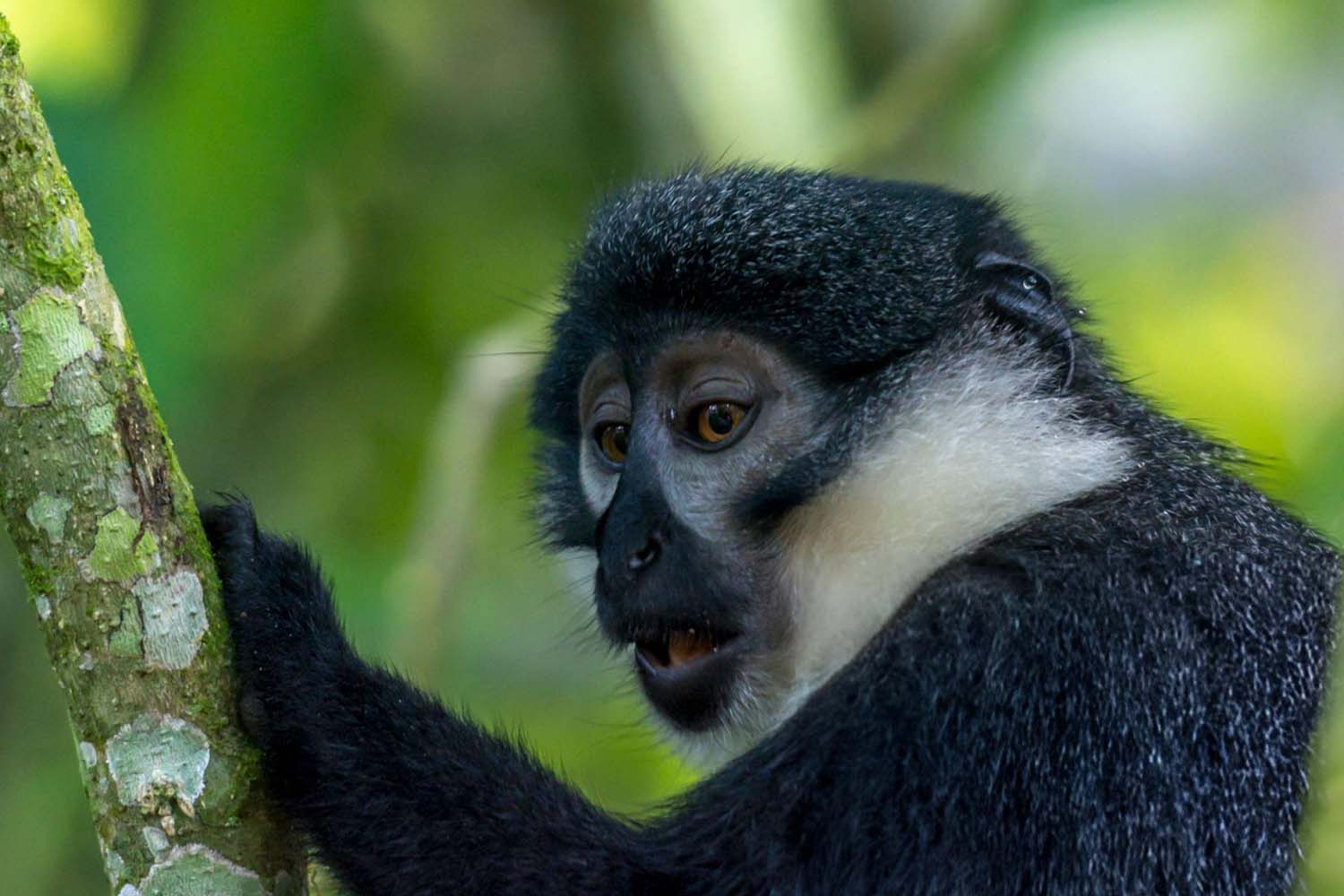
colobus monkey in Volcanoes national park in rwanda