Bwindi Impenetrable National Park
Bwindi: Fantastic For Gorilla Trekking
Tucked away in the mist-covered hills of southwestern Uganda, Bwindi Impenetrable National Park is one of Africa’s most biologically rich and iconic destinations. A UNESCO World Heritage Site, Bwindi spans over 330 square kilometers of primeval rainforest that has remained largely untouched for more than 25,000 years. It is famously home to nearly half of the world’s remaining mountain gorilla population and is widely recognized as the best place on Earth to see these gentle giants in their natural habitat.
But Bwindi is far more than a gorilla trekking site. Its ancient canopy shelters a wealth of biodiversity, from rare birds and butterflies to orchids, primates, and towering trees wrapped in vines and moss. The experience of entering Bwindi feels like stepping into a living museum of life—raw, dense, and teeming with energy.
What makes Bwindi special is not just its wildlife, but also the connection it fosters with nature, conservation, and local communities. Travelers come here seeking more than photos; they leave with a deeper understanding of Uganda’s ecological treasures and cultural resilience.
Bwindi is the ideal destination for a dedicated primate trekking safari, while also pairing well with Queen Elizabeth and Kibale Forest National Parks. Also, due to the excellent accommodations located just outside the park, you could conclude a mountain trekking expedition with some peaceful time in the rainforest. Bwindi never fails to leave a lasting impression.
Bwindi Gorilla Trekking Safaris


Wildlife: Flora & Fauna
Bwindi's rich ecosystems support an astonishing variety of plant and animal life. The park's altitudinal range (1,160 to 2,607 meters) creates diverse ecological zones, from lowland forest to montane jungle. Over 1,000 flowering plant species have been recorded here, including over 100 species of ferns and a wealth of epiphytes, climbers, and ancient trees.
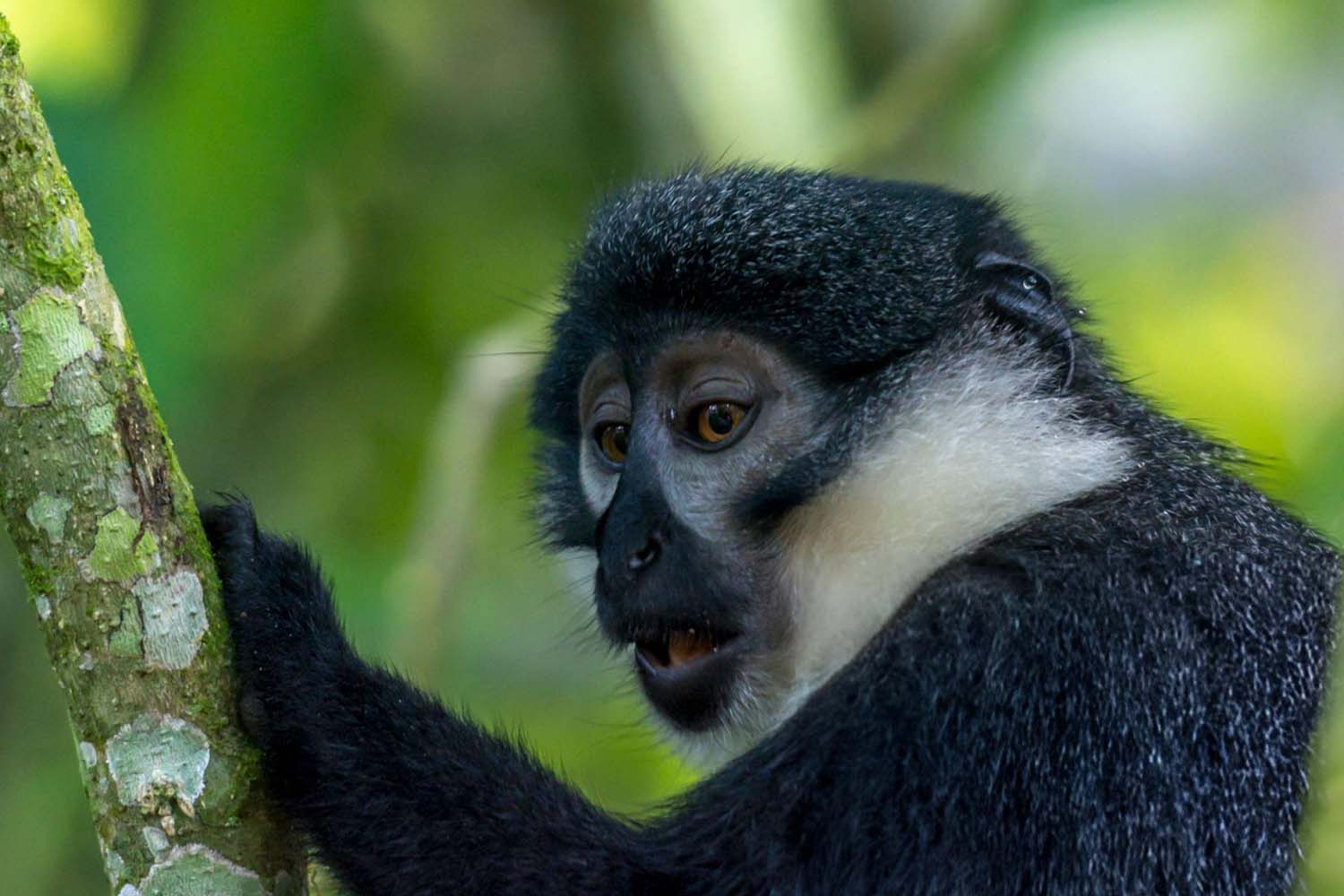
This diversity provides a haven for over 120 mammal species, making Bwindi the most biodiverse forest in East Africa. While mountain gorillas steal the spotlight, the forest is also home to chimpanzees, L'Hoest's monkeys, black-and-white colobus, and numerous small antelopes. The forest floor rustles with bush pigs and golden cats, while butterflies and reptiles hide in the undergrowth.
Birders will find paradise here, with over 350 species recorded, including 23 Albertine Rift endemics such as the African green broadbill and Shelley’s crimsonwing. The forest echoes with birdsong at dawn and dusk, a daily reminder of the vibrancy of this living landscape.
Bwindi’s incredible biodiversity also makes it a hub for researchers, conservationists, and ecotourists who value both the protection and appreciation of wild spaces.

Mountain Gorillas
Bwindi is home to approximately 459 mountain gorillas, nearly half the global population. These critically endangered primates live in stable family groups led by dominant silverbacks and are highly social, intelligent, and gentle. Unlike other gorilla species, mountain gorillas do not survive in captivity, making in-situ conservation absolutely essential.
What makes Bwindi particularly unique is its ecological suitability for these primates. The dense forest and varied altitude provide year-round food sources such as fruits, bamboo shoots, leaves, and bark. Unlike the open bamboo zones of Rwanda, Bwindi’s terrain is more rugged and densely vegetated, which makes encounters more immersive and primal.
Visitors to Bwindi can track gorilla families that have been habituated—accustomed to limited human presence over time. Currently, there are over 20 habituated families distributed across four sectors of the park: Buhoma, Ruhija, Rushaga, and Nkuringo.
Each family has its own dynamic, with playful juveniles, nurturing mothers, and powerful silverbacks. Spending an hour with them is a deeply moving experience that inspires awe, empathy, and a powerful sense of connection.

Activities in Bwindi
Gorilla Trekking: This is the main draw for most visitors. Treks begin early in the morning with a briefing from park rangers before setting off into the forest to locate a specific gorilla family. The hike can last anywhere from 2 to 6 hours, depending on where the gorillas are that day.
Trekking Sectors:
- Buhoma (north): Oldest and most established; convenient from Queen Elizabeth.
- Ruhija (east): Known for easier trekking terrain and great birding.
- Rushaga & Nkuringo (south): Steeper terrain, more habituated groups, and great for scenic views and access from Rwanda.
Gorilla Habituation Experience: Spend up to 4 hours with a gorilla group that is still becoming accustomed to human presence. Unlike regular gorilla trekking, this experience—available only in the Rushaga sector—allows you to witness the process of habituation alongside researchers and trackers. You'll observe the gorillas from a greater distance at first, gradually moving closer as they show signs of comfort. It’s a more immersive, raw, and scientific insight into gorilla behavior and conservation work.
Nature Hiking Trails: Bwindi offers several hiking trails that cater to both leisure walkers and seasoned trekkers. These guided hikes are rich with natural and cultural discoveries, showcasing waterfalls, bamboo forests, scenic valleys, and panoramic viewpoints. The Mubwindi Swamp Trail in Ruhija offers high-altitude birding and unique swamp ecology, while the Ivy River Trail between Buhoma and Nkuringo provides a rewarding challenge through thick jungle, often with views of gorillas, monkeys, and rare plant species.
Batwa Cultural Experience: This community-led encounter offers respectful insight into the way of life of the Batwa people—the forest’s first inhabitants. Evicted during the formation of the national park, the Batwa now share their traditions through storytelling, music, fire-making, and hunting demonstrations. The experience is educational and deeply moving, shedding light on indigenous knowledge and ongoing conservation dynamics.
Community Walks: Beyond the forest, guided walks into surrounding communities offer authentic interaction with daily Ugandan life. You can visit banana beer brewers, traditional healers, tea growers, and women’s artisan cooperatives. These experiences showcase the symbiotic relationship between conservation and community development, with tourism proceeds reinvested into local livelihoods.
Birding: Bwindi is a dream for birders, especially in the Ruhija and Buhoma sectors. The forest is home to over 350 species, including 23 Albertine Rift endemics. With expert birding guides, you can spot species like the African green broadbill, handsome francolin, and dusky crimsonwing. Early morning walks are best, when the forest comes alive with birdsong, light, and color.

Location & How to Access
Bwindi lies in southwestern Uganda, near the borders of Rwanda and the Democratic Republic of Congo. It can be accessed in several ways:
- By Road: Approximately 8–10 hours from Kampala or Entebbe by 4x4. Most travelers combine Bwindi with Queen Elizabeth or Lake Mburo to break up the journey.
- By Air: Scheduled or chartered flights from Entebbe to Kihihi (serving Buhoma and Ruhija) or Kisoro (for Rushaga and Nkuringo). Drive times from the airstrips range between 1–2.5 hours.
- From Rwanda (border crossing): Many travelers arrive via Kigali and cross into Uganda by road (approx. 4–5 hours) for access to southern sectors like Nkuringo and Rushaga.

Best Time to Visit
Bwindi can be visited year-round, but the best conditions are during the dry seasons: June to September and December to February. These months offer more comfortable trekking, clearer forest paths, and better photography conditions.
The wet seasons (March to May and October to November) bring heavier rainfall and slippery trails but also offer fewer crowds, lush green surroundings, and lower lodge rates. Birders will appreciate the migratory activity during wetter months.
Regardless of the season, gorilla trekking permits are limited and should be booked well in advance.
Safari Trips Featuring Bwindi
Most travelers spend 2 to 3 nights in Bwindi, allowing one full day for gorilla trekking and another for hiking, birding, or cultural immersion. Bwindi is often a highlight in a broader Uganda safari itinerary.
Popular combinations include:
- Bwindi + Queen Elizabeth: Gorilla trekking plus game drives and boat safaris.
- Bwindi + Kibale Forest: Track both gorillas and chimpanzees.
- Bwindi + Lake Bunyonyi: End your trek with peaceful lakeside relaxation.
- Bwindi + Volcanoes National Park (Rwanda): Cross-border primate adventures.